Skip to main content Skip to navigation
Connecting curious minds with uncommon, undeniably Northwest reads

Schoolgirls expelled for refusing to salute the flag

U.S. flag, bakclit
We asked Bruce Ramsey for stories that could have—but didn’t—make it into his new book, Seattle in the Great Depression, and he generously offered several. We hope you enjoy reading this one as much as we did!


In November 1935, three girls at the Silver Lake Elementary School in Snohomish County refuse to recite the Pledge of Allegiance. Ruth Ann Wade, 9, Hazel Simmons, 10, and Marilyn Perenoud, 8, stand at attention but make no salute.

This is a problem, and not just at one elementary school south of Everett. N.D. Showalter, state superintendent of public instruction, says schoolchildren have been refusing to salute the flag in King, Yakima, and Grays Harbor counties.

“We do not wish to penalize the children for something the parents undoubtedly are much to blame for,” he says. “Some of the parents claim to be citizens but fail to show citizenship papers. Many are on relief rolls.” (This is the middle of the Great Depression.) Showalter suggests that noncitizen families can be deported.

The roots of this go back two decades. World War I brings with it a harsh campaign for national loyalty. Germans are the enemy; saying anything pro-German is a federal crime. Favoring German literature, music, and language is not a crime, but it is seen as anti-American.

As the war ends, the worry shifts to the Communists: Lenin’s Bolsheviks are in the midst of conquering Russia, and the labor movement, particularly in Seattle, is looking on with obvious interest. In Olympia, the legislature responds in 1919 with a law making it a felony to fly the Soviet flag. The law also instructs all state public schools to fly the Stars and Stripes and for pupils to salute it once a week. Teachers who refuse to lead the salute can be fired. Children who refuse to salute the flag can be expelled.

In 1935, with the nation deep into the Depression, comes another upsurge in radicalism. Once again, the response is a campaign for loyalty. “One of the most disastrous effects of our easy-going way of allowing Communist propaganda to seep into our educational institutions is the refusal of many of our young people to salute the flag,” says the Post-Intelligencer, Seattle’s morning daily.

The girls at Silver Lake Elementary School are not refusing to salute the flag on account of Communist propaganda. They are Jehovah’s Witnesses, a sect whose members have been instructed that that sort of fealty should be reserved for God, not the state. In some states, schoolchildren are free not to salute, but Washington’s law cuts no slack for religious belief. (And in 1935, there is no “under God” in the Pledge.)

Wade’s parents transfer her to a school in Everett, where the newspapers report that she follows the rules and salutes the flag. The other girls don’t. Clifford Carpenter, Snohomish County superintendent of schools, spends nearly an hour trying to convince Simmons that reciting the Pledge of Allegiance is different from worshipping a graven image. The girl is not moved. She and Perenoud are duly expelled.

“We dislike doing this,” school principal Ray Treichel tells the press, “but the girls are setting a bad example. The other youngsters are teasing them and in some instances pretending to ape them.”

There is almost no public argument about this. It doesn’t matter that the legislature that passed the law in 1919 was Republican, and in 1935 it is overwhelmingly Democrat. Seattle has three daily newspapers with different political orientations. The Times is establishment Republican, the Star is liberal Democrat, and the Post-Intelligencer, reflecting William Randolph Hearst’s position, is shrilly right wing. (This will change after the P-I strike a year later.) None of Seattle’s three dailies comes to the girls’ defense.

In 1935, Seattle also has three left-wing weekly papers: the Washington Commonwealth (socialist), the Voice of Action (communist), and the Western States Technocrat (an oracle of technocracy). None of them is interested in the Pledge of Allegiance cases. The one note of dissent comes from Seattle’s upper-class weekly, the Argus, which suggests it’s no big deal that three schoolgirls refuse to say the Pledge, and that the teacher should have just looked the other way.

In the early 1940s, cases of Jehovah’s Witnesses refusing to salute the flag twice go to the U.S. Supreme Court. In the first case, Minersville School District v. Gobitis (1940), the Jehovah’s Witnesses lose. In an 8-1 ruling, Justice Felix Frankfurter argues, “The flag is the symbol of our national unity,” and that “National unity is the basis of national security.” Notably, Gobitis is handed down during a moment of national emergency when Nazi Germany is invading France.

In 1943, the court changes its mind. The war is going better for the Allies; the Russians have beaten the Germans at Stalingrad. Also, the court’s ruling in Gobitis has prompted violence against Jehovah’s Witnesses, which is not what the government wants. In the second flag-salute case, West Virginia State Board of Education v. Barnette, the court rules that the state cannot compel its citizens to salute the flag. Justice Robert H. Jackson famously writes, “No official, high or petty, can prescribe what shall be orthodox in politics, nationalism, religion, or other matters of opinion or force citizens to confess by word or act their faith therein.”

And that has been the rule ever since.

Bruce Ramsey holds a bachelor’s degree in business administration from the University of Washington and studied graduate-level journalism at the University of California, Berkeley. Ramsey began his journalism career as a business reporter at the Daily Journal American in Bellevue, Washington, followed by stints at the Seattle Post-Intelligencer, Marple’s Business Newsletter, Asiaweek magazine, and the Seattle Times, where he was an editorial columnist and member of the editorial board. Ramsey has two previous books, both from Caxton Press: Unsanctioned Voice: Garet Garrett, Journalist of the Old Right and The Panic of 1893: The Untold Story of Washington State’s First Depression.


Flag photo copyright Joshua Nathanson, via Wikimedia Commons

Flag salute: Session Laws of the State of Washington, 1919: chapter 90, sections 4482, 4482A, signed 3-12-1919; Zednick, “Display of Red Flag is Felony, New Laws Say,” Seattle Times, 6-8-1919, p. 19; “An Heroic Flag,” Seattle Post-Intelligencer, 12-20, 1935, p.  4; “3 Girls Face Reform School in Flag Case,” P-I, 11-23-1935, p. 1; “Girl Again Refuses to Salute American Flag; Is Suspended,” Everett Herald, 11-15-1935, p. 4; “Girl Objector Now Salutes School Flag” and “State Will Investigate Flag Cases Thoroughly,” P-I, 12-7-1935, p. 6; “Saluting the Flag,” Argus, 12-7-1935, p. 1.

In celebration of International Children’s Book Day—yes, University Presses Do Reach Children!

Close-up of offset printing press

University presses have a much greater impact than many realize—sometimes even their own institutions. It may be surprising, but along with books written for young people, even our more academic titles can benefit children. Our authors often spend decades researching a topic, including hours upon hours deciphering old original documents, sometimes in uncomfortable places. Their passion transforms the inaccessible into the accessible, and feeds into an astonishing array of books and programs.

A stellar example of this kind of expansive outreach is In the Path of Destruction: Eyewitness Chronicles of Mount St. Helens by Richard Waitt. Part of a U.S. Geological Survey team conducting volcano research in the Cascades, Waitt was one of the first to arrive following the mountain’s early rumblings. His journey collecting eyewitness accounts began with a conversation in a bar the third week after Mount St. Helens erupted. The couple he met barely outraced a searing ash cloud, and Waitt realized their experiences could inform geologic studies. He eventually completed hundreds of interviews—many could not be conducted today. He also tapped legal depositions, personal diaries, geologists’ field notes, and more to present a detailed and accurate chronicle of events.

Enthusiastically endorsed by numerous publications including Scientific American, American Scientist, and the Bulletin of Volcanology, Waitt’s book became the basis of a Scientific American blog series. He introduced an episode of the Smithsonian Channel’s Make It Out Alive program inspired by his book. New York Times bestselling children’s author Lauren Tarshis relied on it to write book #14 in her I Survived series for elementary school students, and also created a related Storyworks nonfiction feature. And it guided several other authors writing their own books on the eruption.

“Part scientific treatise, part eyewitness chronicles, and all engrossing, this is one of the most valuable books ever written about a volcanic eruption.”—Scientific American

“An invaluable and sobering read.”—American Scientist

“This book constitutes a fantastic treasure of information on one single eruption, unprecedented in volcanological literature. The plethora of directly witnessed details presented in its pages will serve as an information source for many years ahead for anyone interested in understanding the processes affecting the natural and human environment within the influence area of a volcanic eruption…I warmly recommend this outstanding, unique book.”—Bulletin of Volcanology

A celebration of Palouse Country history and beauty

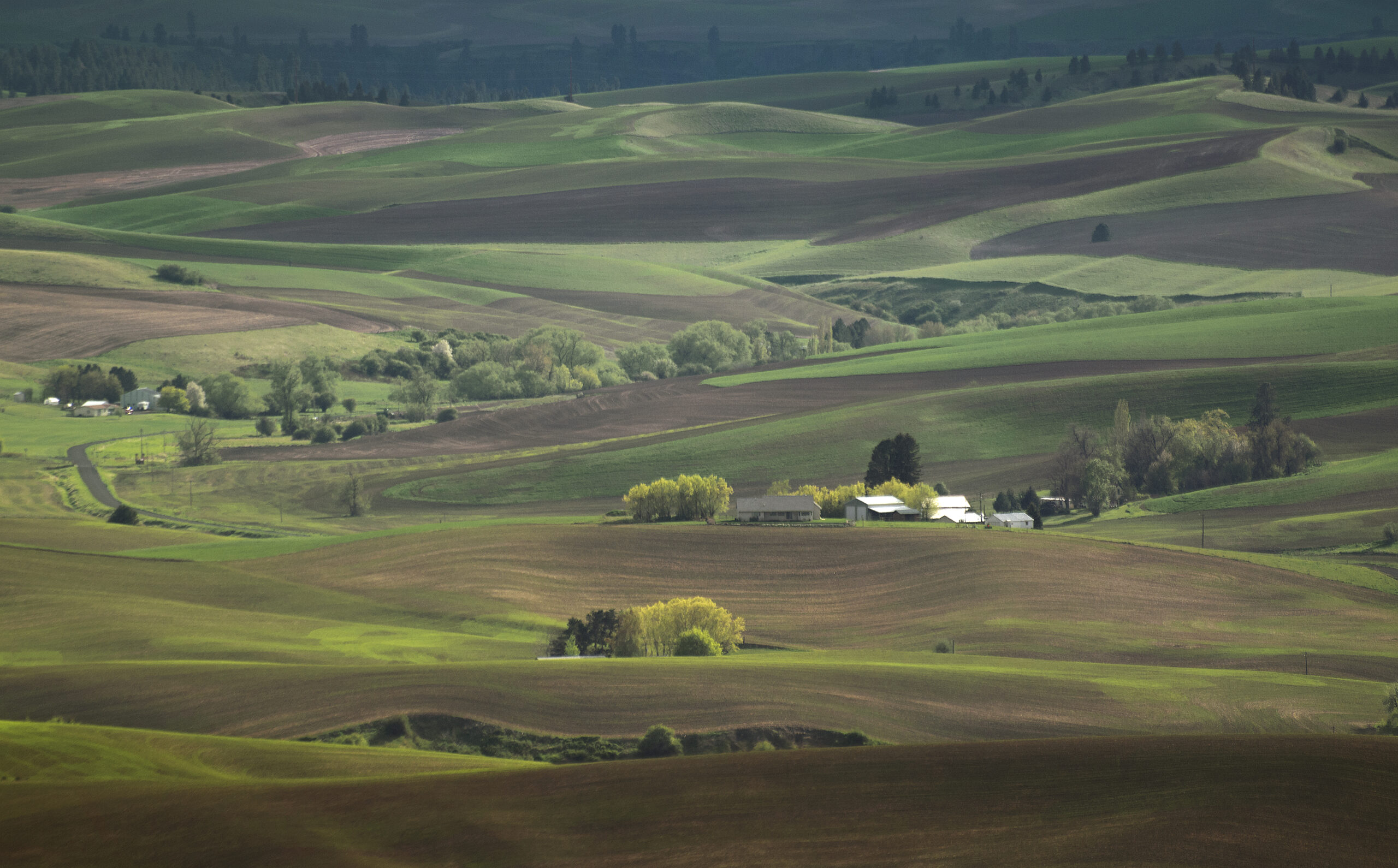
Springtime view of rolling Palouse hills south of Steptoe, Washington

PULLMAN, Wash.— Basalt Books’ newest title, Celebrating Palouse Country: A History of the Landscape in Text and Images by Palouse locals Richard D. Scheuerman and John Clement, transports readers through time among the Palouse Country’s beauty and expanse, starting with its First Peoples and chronicling the history of the Palouse region’s inhabitants across centuries. Enhanced with spectacular images from award-winning photographer John Clement, this volume continues an enduring collaboration and substantially updates a popular book the pair originally published thirty years ago. Alexander C. MacGregor contributed the foreword.

Scheuerman grew up listening to his grandpa’s stories about homesteading in eastern Washington. Visiting the Colville Reservation as a teenager, he met Chief Kamiakin’s grandson, who described what the land was like before fences restricted access to so many areas. Those early experiences became a significant influence in Scheuerman’s life, and across the years, he interviewed dozens of the region’s Native Americans and first-generation immigrants.

Moving with the seasons, Plateau Indian tribes dwelled along the region’s rivers, streams, and bunchgrass hills, maintaining an intimate relationship with the land and utilizing its natural bounty until the 1800s, when the U.S. government forced the majority onto reservations and opened the land to immigration. Native-born Americans and Canadians, Irish and British, Chinese and Japanese, Empire, Volga, and Black Sea Germans, Norwegians, and Swedes all came, and many formed distinct settlements. Most farmed or raised stock, but some built roads and railroads or mined for gold. Chapters covering the various groups depict events that prompted emigration, describe the settlers’ transitions and living conditions, chronicle significant people and families, discuss major influences that impacted the population, and recount how the various communities grew and changed.

A career historian and professional educator, Dr. Richard D. Scheuerman grew up on a small Palouse Country farm between Endicott and St. John, Washington. A retired Seattle Pacific University professor, he has published numerous books and articles on a variety of topics, most of which relate to the history and agriculture of the Inland Pacific Northwest. His writing has received the Governor’s Writers Award, Inland Northwest Magazine’s Best of Issue Article, and recognition as a finalist for the Washington State Book of the Year.

The recipient of more than sixty regional, national, and international awards for pictorial and commercial work, John Clement began his photography career in the mid-1970s and has exhibited in numerous galleries and art shows, including one in the permanent collection of the International Photography Hall of Fame.

Celebrating Palouse Country is paperback, 6″ x 9″ and 236 pages. The suggested retail price for the paperback is $34.95, and for the hardbound, $55. Both are available through bookstores nationwide, direct from Basalt Books at 800-354-7360, or online at basaltbooks.wsu.edu. The trade imprint of nonprofit academic publisher Washington State University Press in Pullman, Washington, Basalt Books concentrates on general interest titles about cooking, nature, history, science, and more for young children to older readers—all with a connection to the Northwest.

About the authors:

Retired Seattle Pacific University Associate Professor Dr. Richard D. Scheuerman grew up on a small Palouse Country farm between Endicott and St. John, Washington. He holds a Ph.D. in Educational Leadership from Gonzaga University, an M.A. in History from Pacific Lutheran University, and a B.A. in History and Education from Washington State University. The co-author of more than ten books on Pacific Northwest history, he has received the Washington State Historical Society’s Robert Gray Medal, the Washington Governor’s Award for Excellence in Teaching, a Schneidmiller Foundation grant, and the University of California-Riverside Rupert Costo Medallion for Research in Native American History.

The recipient of more than sixty regional, national, and international awards for pictorial and commercial photography, John Clement began his career in the mid-1970s and has since exhibited in numerous galleries and art shows, including one in the permanent collection of the International Hall of Fame of Photography. He has two associate degrees in photography, as well as a Master of Photography degree from Professional Photographers of America.

Cover of Celebrating Palouse Country

WSU Press finds a new home!

After being slated to close as of December 31, 2024, Washington State University Press has a new home under the WSU Libraries and will continue publishing the wonderful titles that bring knowledge and enjoyment to so many. We are extremely grateful to our Provost and Interim Dean, and for the outpouring of support following the closure announcement. Read the complete article here.

New Book Reveals Just How Close Pacific NW Forests Came to Extinction

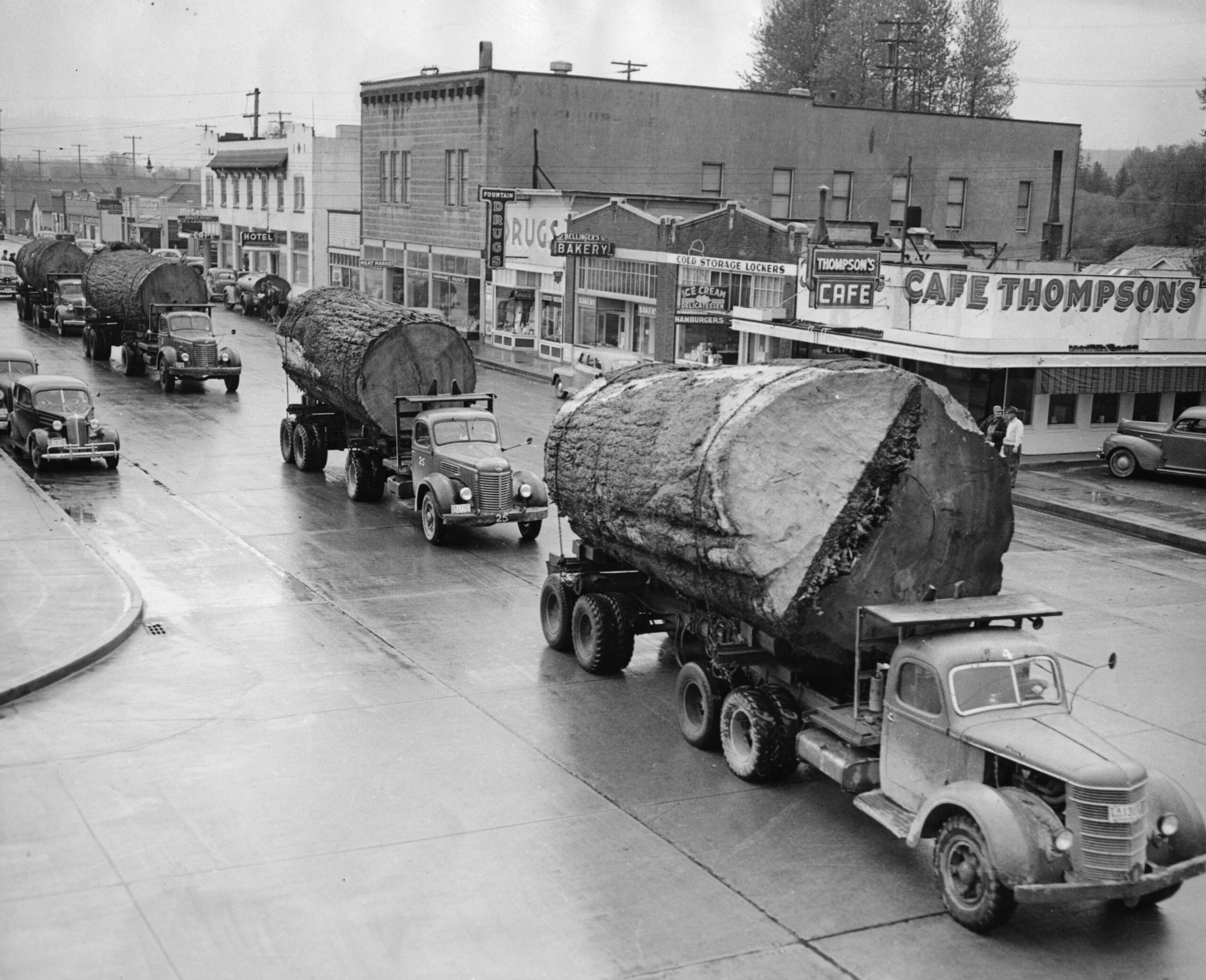
Black and white photo showing trucks hauling cuts of large old growth trees

Gifford Pinchot, chief of the United States Forest Service (USFS) from 1905 to 1910, marveled at the Cascades’ old growth forests—yet today it is difficult to find one like those Pinchot saw. Instead, by mid-century the USFS dramatically increased allowable timber industry logging for all national forests and began replacing ancient forests with younger, faster-growing trees. By 1990 less than 13% of the Pacific Northwest’s original old growth remained, and projected USFS plans were to log most of the unprotected remnant by 2023. A new book, Forest Under Siege: The Story of Old Growth After Gifford Pinchot, by longtime environmental activist Rand Schenck, offers an account of old growth in the Pacific Northwest, told primarily through the lens of the Gifford Pinchot National Forest (GPNF).

Schenck owns a GPNF recreation cabin located in one of the best-preserved low elevation old growth forests in the Pacific Northwest. “I began to ponder why the old growth was preserved around my cabin, yet so little remained everywhere else. I realized that by focusing on one particular national forest, I could tell a story that would make concrete what for many is very abstract: how old growth was viewed by foresters, why they cut almost all of it down, and now what can be and is being done to restore it,” he says. In order to trace 100 years of Pacific Northwest forestry, the author reviewed numerous USFS documents and reports. He also interviewed industry leaders, timber war stakeholders, and prominent environmentalists. What he found reveals just how close regional forests came to extinction. He describes why the USFS moved away from decades of stewardship to relentless and unsustainable harvest, the consequences of intensive management, and why attempts to replant trees failed. He explores how laws like the Multiple Use-Sustained Yield Act, surprise discoveries following a volcanic eruption, and the Northwest Forest Plan slowly initiated change. He explains how gradually, a new ecological approach to forest management—one that has the potential to set a strong foundation for forests in the next century to again be dominated by old growth—evolved. As part of this realigned perspective, scientists discovered that on a per acre basis, Pacific Northwest forests sequester and store more carbon than any other forests in the world.

Schenck also provides a much-needed corrective on the environmental community’s understanding of Gifford Pinchot. Many wrongly assume that he approved the singular emphasis on “getting the cut out,” but as a lifelong Progressive, Pinchot cared deeply about small, rural communities close to national forests and wanted sustainable logging practices that those populations could depend on to provide jobs far into the future. Finally, Schenck reviews efforts to restore the damage and offers hope for old growth rebirth.

Cover of Forest Under Siege

About the author:

Rand Schenck began his forestry focused environmental activism in the late 1970s at the Sierra Club, where over the next 15 years he served in a variety of leadership roles. While there, his major objective was increasing the amount of public lands designated as wilderness. After moving to Oregon in 1996, he joined the Board of Oregon Natural Resources Council (now Oregon Wild) and continued his dedication to environmental causes, working to protect Oregon’s forests, wild waters, and wildlife. Over the past decade, Rand has shifted his involvement to concentrate on climate change. He helped found the grassroots nonprofit, 350PDX, and then Mobilizing Climate Action Together (MCAT), an all-volunteer group sponsored by the Oregon League of Conservation Voters that focuses on climate change policy with the Oregon Legislature and the Executive Branch. Rand leads MCAT’s Forestry and Natural Lands branch. His team seeks to implement climate smart forestry that optimizes carbon sequestration and storage by protecting mature and old growth trees, growing trees longer, and ensuring a diversity of species, ages and structures.

Professionally, Rand spent much of his career focused on helping large organizations be more humane and successful through executive coaching, building beneficial cultures, managing organizational change, and developing effective leadership. He has a BA in History an MA in Recreation Administration, and a Masters of Social Work. Now retired, he has even more time to spend hiking and backpacking in the forests he loves, as well as enjoying many other benefits of Pacific Northwest living—skiing, rafting, canoeing, and sea kayaking.

Stories behind Washington State’s remarkable round barns

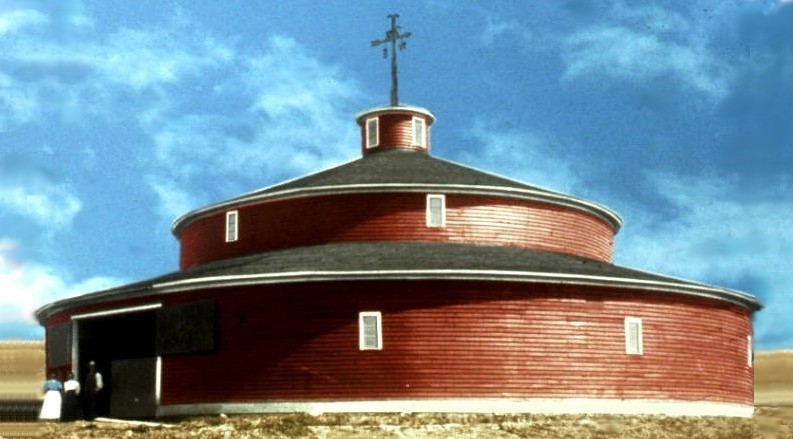
Photograph - exterior of the Manning Barn

Only a tiny percentage of the approximately 3,000 barns in Washington State are round. Enchanted by their beauty, complexity, and historical significance, Tom and Helen Bartuska have been researching, visiting, and photographing the Pacific Northwest’s round barns since the 1960s, shortly after Tom accepted a teaching position at Washington State University’s architecture department. “Barns—especially round barns—are unfortunately vanishing from the rural landscape, yet they have an important and fascinating tale to convey.  They are beautiful icons of our country’s landscape and are an important part of our history and cultural heritage,” the Bartuskas say.  Focusing on agricultural structures over 50 years old with at least two stories, the pair eventually compiled a list of 21 buildings and made it their mission to create a comprehensive inventory—recording who built each one and when, original and current uses, individual characteristics, construction details, and anecdotes they learned along the way. They compiled their work into a new book, Washington State’s Round Barns: Preserving a Vanishing Rural Heritage.

Since most of the barns were constructed in the early 1900s, the couple explored archives to gather historic photographs and paperwork. When possible, they also took interior and exterior photographs and talked with owners about each structure’s story, revisiting several sites to document how the barns changed over time. For example, Washington’s oldest known round barn was originally located on a hill overlooking Cathlamet and the Columbia River, but now sits in a field behind the town’s cemetery. It was built around a large live tree. After completion the tree was removed, but the cut-off trunk remains as an integral part of the roof.

In addition, the Bartuskas researched round barns’ fascinating history and development across the United States—including similarities and differences, various construction methods and designs, advantages and disadvantages, and the reasons they were built.  Perhaps surprisingly, one is that they were cheaper. Utilizing shared labor from extended family and neighbors made materials costs the largest expense. One early 1900s report calculated total materials savings for a 60-foot diameter round barn versus an equivalent sized plank-framed rectangular barn as $378.77, or 36%.

Sadly, the structures continue to succumb to economic and technological changes, as well as to fire, disrepair, and the forces of nature. Seven of the documented Washington barns no longer exist, and several of the remaining fourteen are in peril. Hoping to inspire others to help maintain, preserve, and restore these unique cultural icons, the authors added examples of successful re-use and creative conservation nationwide, along with ongoing efforts to save other types of barns, buildings, and rural communities.

Cover of Washington State's Round Barns

About the authors:

Tom and Helen Bartuska have been interested in round barns and reanimating rural buildings and communities since their college days. Avid world travelers, they spent a year in Afghanistan after Tom received a Fulbright Award to teach at Kabul University. While there, Helen taught at an international primary school. They now reside in the Pacific Northwest and volunteer at IslandWood, a school nationally recognized for its outdoor programs and contemporary sustainable design. Tom received his Bachelor and Master of Architecture from the University of Illinois, and completed post graduate studies at the University of Manchester. After a forty-year teaching career, he is now a professor emeritus at Washington State University’s School of Architecture and Construction Management. Helen attended the University of Illinois and the University of Louisiana-Lafayette, and holds a BA in Home Economics, Child and Family Studies. She received her Montessori certification from England’s St. Nicholas Montessori Training Center, and taught young children for over two decades.

WSU Press publishes what is likely the first poetry collection from the Muckleshoot

close up of cover art from A Muckleshoot Poetry Anthology

Our new poetry collection, A Muckleshoot Poetry Anthology: At the Confluence of the Green and White Rivers, curated by Susan Landgraf and just published by Washington State University Press, originated from a grant and more than a dozen workshops. The book showcases the work of two artists and more than fifty poets from different tribal heritages living on the Muckleshoot Indian Reservation.

Expressive and moving, the participants’ pieces are about searching and belonging, loss and finding. Many are stories of “what happened” and “why.” All share a common theme—a reaching back and a reaching forward—sometimes in the same poem. Composed by writers who range in age from elementary school to adult, they highlight Muckleshoot history and culture, but also spotlight individual histories, lessons, and beliefs.

“I had heard about a call for proposals from the Academy of American Poets and because I was Poet Laureate of Auburn, Washington, at that time, I thought it was a wonderful opportunity—but I had no project in mind. A week before the deadline, I woke up one morning with the thought that it was right here in my backyard, ‘We are the Muckleshoot,’” Landgraf explains. “I wanted to know more about who the Muckleshoot people are. I wanted to hear their voices in poetry, since I am a poet. To my knowledge, no one had published an anthology of poetry by people of the Tribe. So I applied. I got the request sent off four hours before the deadline,” Landgraf says. She received the grant in June 2020, just as the Covid 19 shutdown started, so it took several months to get the word out about the workshops and anthology. She finished curating the manuscript fourteen months later, in August 2021, and says her favorite parts were conducting the poetry workshops and having the poems come in. “It was like Valentine’s Day every time I found a new poet in my email.”

Muckleshoot is the Native name for the prairie on which the 6.128 square-mile reservation was established in 1857. Federally recognized as descendants of the Duwamish and Upper Puyallup people who inhabited Central Puget Sound thousands of years before non-Indian settlement, approximately 3,600 people live on the reservation located near the original confluence of the Green and White rivers. The two vital tributaries held the sacred salmon and served as “highways” for the people. Tribal members view the land as linked to their heritage, stating, “What we were lasts only as long as we carry the memory.” This new work helps carry the memory.

Poet and journalist Susan Landgraf’s next title, Journey of Trees, is set to be released in 2024. She taught at Highline College and Jiao Tong University in Shanghai, as well as at the Port Townsend Writers’ Conference. She served as Poet Laureate of Auburn, Washington, from 2018 to 2020.


Washington State University Press invites manuscripts for a new book series

New Histories of the American West logo

Washington State University Press invites manuscripts for a new book series, New Histories of the American West, edited by Clay S. Jenkinson.

We are looking for new voices, new perspectives, new authors (and established authors too) for books about exploration, the American frontier, Native Americans, cultural encounters, the environment, bioregionalism, and of course Lewis and Clark.

We have a particular interest in projects that take the approach of James Ronda’s groundbreaking work, Lewis and Clark Among the Indians (1984).  We encourage manuscripts by Native Americans on:

  • Lewis and Clark Among the Osage
  • Among the Lakota
  • Among the Mandan and Hidatsa
  • Among the Shoshone
  • Among the Clatsops
  • Among the Blackfeet

About the series editor:

Clay Jenkinson is a historian and humanities scholar based in North Dakota. He is founder of both the Theodore Roosevelt Center and Listening to America. Clay received a BA from the University of Minnesota, and an MA from Oxford where he was a Rhodes and Danforth Scholar. He is the author of thirteen books, most recently, The Language of Cottonwoods: Essays on the Future of North Dakota. He has appeared in several of Ken Burns’ documentary films.

Clay portrays such historical figures as Thomas Jefferson, Theodore Roosevelt, and J. Robert Oppenheimer. He lives and works on the plains of North Dakota. He is the founder of the Theodore Roosevelt Center at Dickinson State University in western North Dakota, dedicated to the digitization of all of Theodore Roosevelt’s Papers.

FIND PROPOSAL GUIDELINES HERE

The Shocking Story of the Washington Territorial Justice Appointed to the Bench While Indicted for Murder

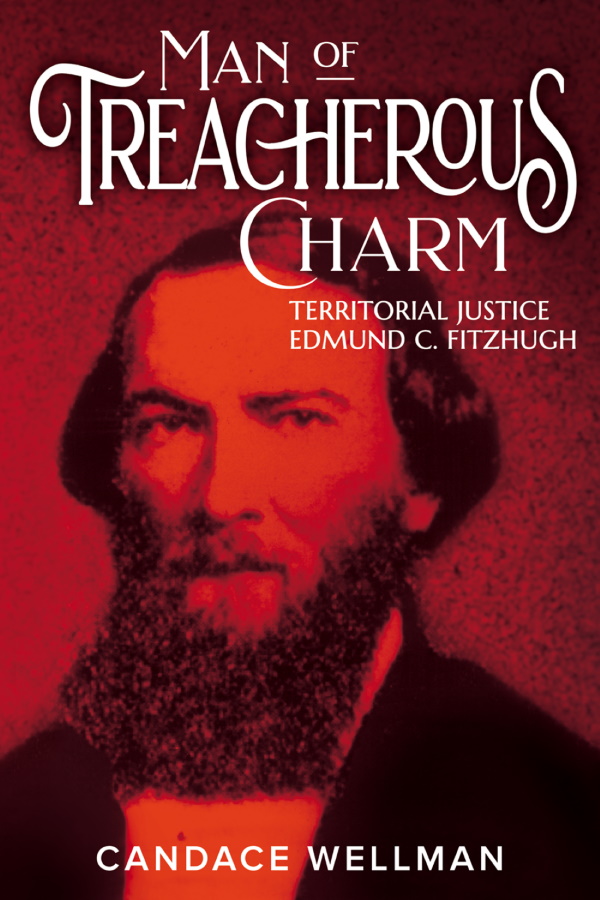
Man of Treacherous Charm cover

HOW ONE WASHINGTON TERRITORIAL JUSTICE EXPLOITED HIS NETWORKS TO INFLUENCE THE REGION’S LEGAL AND SOCIAL HISTORY

“Perhaps the single most enlightening takeaway for me was the stark contrast between the legal landscape of Fitzhugh’s time and that of my own. No current judge would even consider hearing, on appeal, a case over which they had presided as the trial judge…an entertaining and educational read.”—Chuck Snyder, retired Whatcom County Superior Court Judge

Along with his privileged education, Edmund C. Fitzhugh was deeply shaped by his Virginia family’s history and ethics. “From the moment Fitzhugh’s tall leather boots struck the mud flats in front of the Roeder-Peabody Mill in 1854, the effects of the charismatic man on the infant community and Washington Territory were wide, and for some people, destructive,” says Candace A. Wellman, author of the new book, Man of Treacherous Charm: Territorial Justice Edmund C. Fitzhugh, the first full biography of a Washington Territory justice. His life offers insights into the people, politics, and legal practices—vastly different from today—of the territory and 19th century American West. “Fitzhugh was appointed to the federal bench while under indictment for murder. He made measured judicial decisions, helped organize the early Democratic Party machine in California and Washington, helped run a national presidential campaign, and fought heroically in the Civil War. And yet he died alone in a dingy hotel,” she adds.

Wellman’s interest in Fitzhugh began while she volunteered at the Washington State Archives and started to research her first book about indigenous womens’ roles in early Pacific Northwest history. One of the women married Fitzhugh, and Wellman noted his influence on the region’s legal and social history, along with his participation in important events in gold rush era San Francisco and Civil War Virginia. She decided to tell his story, traveling to Virginia to conduct research in Fitzhugh’s hometown and state repositories, as well as to the National Archives, San Francisco’s library, and multiple Washington State collections. Across two decades, she worked with dozens of collaborators.

Born into a wealthy, slave-owning colonial Virginia clan, Fitzhugh learned to focus on accumulating wealth and power. Following his West Point expulsion, he became a small-town lawyer and legislator before seeking fortune in San Francisco, where he associated with prominent attorneys and California Democrats. After coal was discovered in Washington Territory, a newly formed syndicate sent Fitzhugh north to open and manage a Bellingham Bay coal mine, and to sway that region’s Democrats. Elected Whatcom County’s first auditor, he used his position as the territory’s largest employer to benefit himself and the mine. He married two important indigenous women who brought their own kind of wealth and influence. He also exploited family, personal, and political networks to become the first local Indian agent during the Treaty War, a military aide to Governor Isaac Stevens, a district and supreme court justice, and a member of Brigadier General Eppa Hunton’s Civil War staff. After Fitzhugh kidnapped his two children and sent them to a distant white family, his indigenous wives deserted him. Two later marriages to women from prominent colonial families also did not last.


Man of Treacherous Charm cover


A Nostalgic Look at a Life Few People Have Known

Idaho once had close to one thousand fire lookout towers—more than any other state in the Pacific Northwest. Today, that number has dropped dramatically as fire management increasingly relies on infrared and drone technology over human power. A new book, The Last Lookout on Dunn Peak: Fire Spotting in Idaho’s St. Joe National Forest by Nancy Sule Hammond, captures that lost era and recounts a life few will now experience—serving as a United Forest Service fire lookout.

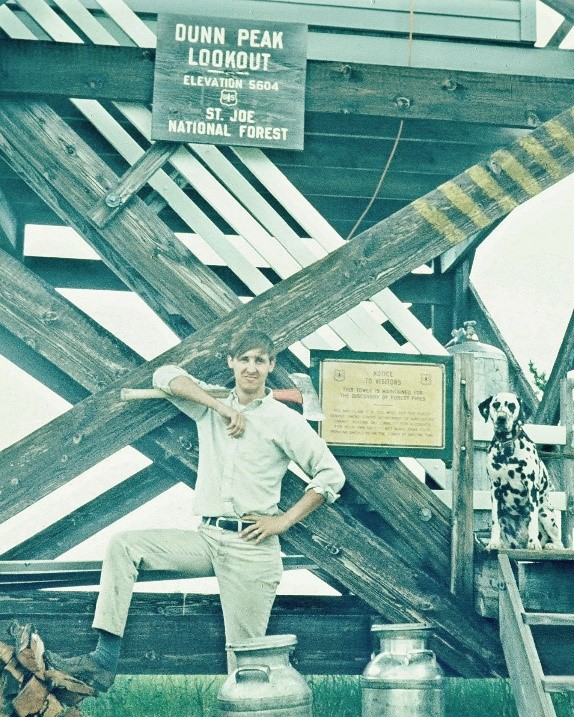
When married high school sweethearts Don and Nancy arrived at his first post eight miles northwest of Avery, Idaho, in 1972, Nancy was puzzled. “I’d expected to find majestic conifers, lots of them,” she says. “But every mountain for miles around was covered in stubby scrub brush and weeds. Now I understood why that other lookout had quit. He was embarrassed to work in a forest without trees.” Their first task was to lug provisions and water up the Dunn Peak Lookout’s steep stairs to the fifteen-by-fifteen-foot cab two stories above the forest floor. The sparse furnishings included a single bed, small bookcase, cabinet, table, and a wood stove. There was no electricity or running water. A battery powered two-way Motorola radio was their only connection to the outside world. That night—engulfed by thunderbolts and filled with adrenalin—they faced their first storm. “It stalled right over our heads. I jumped at each lightning strike,” Nancy recalls.

Unless it was foggy or raining while he was on duty, the Forest Service required Don to conduct binocular searches from the catwalk for at least twenty minutes of every hour. He watched for smoke during the day and the glow of fire at night, and learned to distinguish between blue smoke plumes and white wisps of fog. Despite the primitive conditions, Don, Nancy, and their Dalmatian, Misty, settled in and came to love their lookout adventure. They spotted wildfires, were startled by their first cougar scream, encountered a wide variety of human and animal visitors, discovered delectable huckleberry patches, and simply enjoyed the enchanting beauty all around them.

Don was the last fire spotter to work there. The following year, the Forest Service decided to close the Dunn Peak Lookout, so the couple spent the summer of 1973 at the Middle Sister Peak tower, ten miles southeast of Avery. In The Last Lookout, Nancy shares stories from those two exciting, magical fire seasons, along with their return as volunteers 37 years later. Interspersing her accounts with regional fire history as well as dangers and details of the work, she journeys back to the narrow catwalks and stunning panoramas—a place where storms are building, the landscape is dry, and any lightning strike could ignite a raging wildfire.

The Last Lookout on Dunn Peak cover