Frederick Law Olmsted and the Staten Island Farm
WSU PressBy the time John Charles Olmsted arrived in the Pacific Northwest in 1903, he was a seasoned landscape architect who had worked with Frederick Law Olmsted Sr. in his Brookline, Massachusetts, landscape architecture office at his 99 Warren Street home (now a National Park Service historic site). This chapter takes place in the 1850s and tells the story behind his first American home.
After Frederick Law Olmsted (FLO) settled on scientific farming as his life’s work, and a decade before he won his first Central Park assignment, his father, a Hartford, Connecticut, resident, purchased a small coastal farm on an isolated peninsula near Guilford on Sachem’s Head. The year was 1847.
The farm was not far from Yale, where FLO’s brother (and best friend), John Hull, and other friends were still studying. Although they could visit on weekends, the rocky soil and isolation were great obstacles to success.
Earlier, while visiting Staten Island, FLO’s father had seen Tosomock Farm. Situated near the southern shore of the island, it was closer to New York City. In 1848, FLO’s father loaned his son $12,000 for the purchase. The 140-acre property had splendid views of the waterfront between the island and the Atlantic.
Surrounded by a more lively farming community and closer to his brother and friends, the new farm was more agreeable to FLO’s future plans than Guilford farm. Its old Dutch stone farmhouse and surroundings also suited the new farmer. With his brother John embarking on a medical career and many Yale friends still nearby, the Staten Island farm, Tosomock (also known as Southside), soon became a weekend gathering spot.
Neighbors also came to call or invited the new farmer to dinner. One was Dr. Cyrus Perkins, a retired medical professor, who gave FLO four grapevines from his Holly Farm. He also introduced his granddaughter, Mary Perkins, who had come to live with him after the death of her parents. A friendship soon blossomed between her and John Hull. She also became a bedrock of stability for FLO in the decades to follow.
By the early months of 1850—spurred by the engagement of John Hull and Miss Perkins—the families drew closer. Eager for one last overseas adventure before settling down, and hoping to improve his health, John Hull and his friend Charles Loring Brace planned a walking trip through England. Caught off guard, Frederick wrote his father for help in joining his brother abroad.
Father Olmsted of course agreed, and the three boys set sail for England on April 30, 1850. FLO brought his notebook, intending to write about his travels and learn from farmers abroad about the craft and crops of farming there. At sea, the three passed the time playing chess matches using improvised playing pieces made from cork, and reading aloud to one another. They eventually docked near Liverpool in late May—high springtime in England.
Learning as much from the preserved—or historically designed—country landscapes surrounding each farm and village as from his interviews with local farmers, FLO’s first visit to the English countryside proved a turning point. His successful 1852 book about that English adventure initiated his landscape (and publishing) future.
After the tour, John Hull returned to Staten Island, married Mary Perkins, and headed back to Europe for a honeymoon. In 1853 he, his bride, and their new baby, “Tot” or “Charley” (in time they settled on the name John Charles Olmsted), came home to live in the nine-bedroom Southside farmhouse.
The brothers soon set off together to explore the vast Texas territory—eventually on horseback. The New York editors of FLO’s newspaper column (written under the pen name “Yeoman”) awaited news from San Antonio. FLO had already published coastal South news and views of plantation owners on the topic of the day—slavery. Edited by John Hull, this last installment produced the final touches to the Olmsted literary endeavor, bringing much-needed publishing notoriety and setting the stage for FLO’s next achievement—Central Park.
A decade of living, farming, and writing for New York newspapers and publishing houses from his Staten Island farm was drawing to a close. The loss of his best friend and a chance conversation in a Connecticut Inn would dramatically change Frederick’s life.
Next month, we’ll explore FLO’s move from Southside Farm across the water to New York City and into the abandoned Mount St. Vincent Convent building in the city’s sprawling, recently-acquired Central Park property.
—Joan Hockaday, author of Greenscapes: Olmsted’s Pacific Northwest
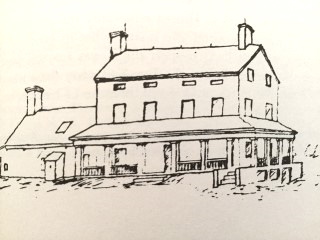
The Staten Island farmhouse, “Southside,” sketch attributed to Frederick Law Olmsted in 1848.

John Hull Olmsted (1825-1857). His medical career on hold, by the end of the decade his tuberculosis was causing concern. John and his family (including John Charles Olmsted) took one last trip to southern Europe to enjoy sunnier, warmer, winter weather. He never returned. With his wife and children nearby, he died in Nice, France, on November 24, 1857. FLO lost his best friend—”You, almost your only friend” his father wrote—and traveling companion.
(From Olmsted’s personal collection of photographs, The Society for the Preservation of New England Antiquities, Boston, Mass.)