
Our Story
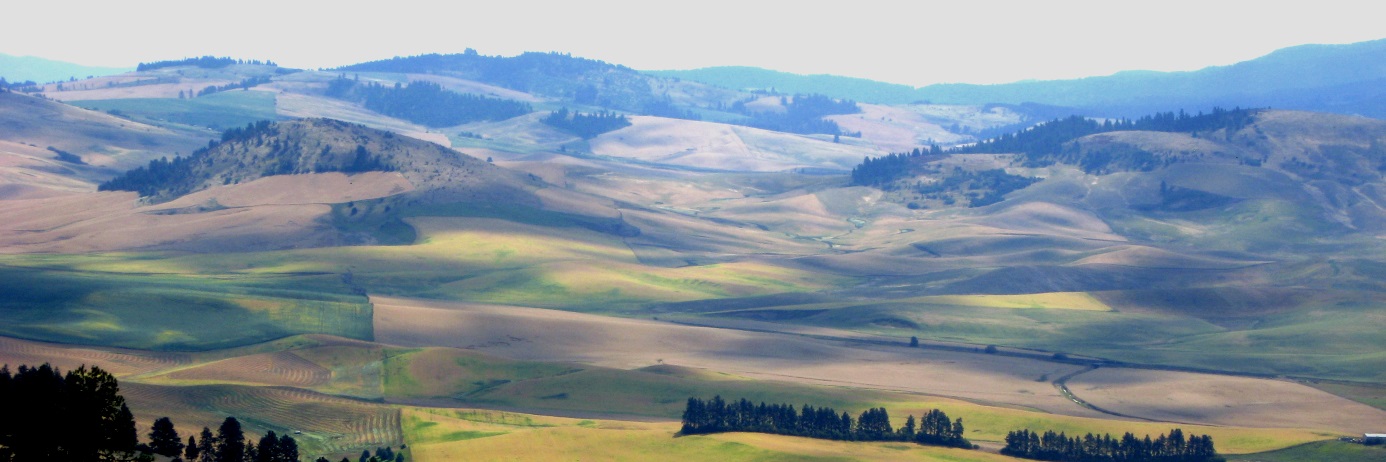
We love our rural location and being so close to the stories we publish. The land grant school now known as Washington State University opened on a frigid winter morning in January 1892. Many students came from farms and were deeply grateful for the opportunity to receive any higher education. The institution grew and added a scholarly publishing division in the 1920s, primarily to distribute faculty research.
Harnessing a vision of revitalization and expansion in the late 1980s, the re-launched press began releasing titles centered on regional history. One of those, Renegade Tribe, (now reprinted as The Snake River-Palouse and the Invasion of the Pacific Northwest) was the first major work published on the Palouse Indians, and received the Washington State Book Award. Since then, Washington State University (WSU) Press has published over two hundred titles, and received numerous honors and awards.
One of our titles even made it to the International Space Station, where the astronaut read it while floating next to a window.
Even though our books often focus on the past, we are excited about our future. We plan to continue publishing eight to ten books each year, and through new series and partnerships, preserve and enrich the history surrounding the Hanford nuclear site, as well as the Lewis and Clark Expedition.
Also check out the story behind our new trade imprint, BASALT BOOKS!
A Different Kind of Passion
We want to help readers find new heroes, connect with their past, and enhance their understanding of the present. Our passion is telling unique, focused stories of the Northwest—lesser-known yet fascinating accounts of people, places, and events that matter in the region’s history or culture and are part of the broad picture of Western expansion.
Like how a Walla Walla, Washington, penitentiary made national news and changed prison reform. Then there’s the story surrounding America’s first endurance race. Or what it’s really like to be a wildlife biologist. Or what happened after the military selected an isolated Columbia River community for a critical, secret, military operation. Or how a determined engineer with a wagon-sized odometer opened up the Northwest, and why deep-seated bitterness still lingers in parts of central Washington.
A Green Approach to Printing
Until our recent move and printing plant closure, we were probably the only university press in the U.S. to print and warehouse most of our books right across the hall from our editorial offices. Cutting-edge digital printing technology provided significant flexibility in page counts and use of color while reducing overall material waste. Choosing recycled paper and ozone-friendly inks and solvents minimized adverse effects of chemicals on the environment. We still make those kinds of choices whenever we can.
Here’s how we did it: