Description
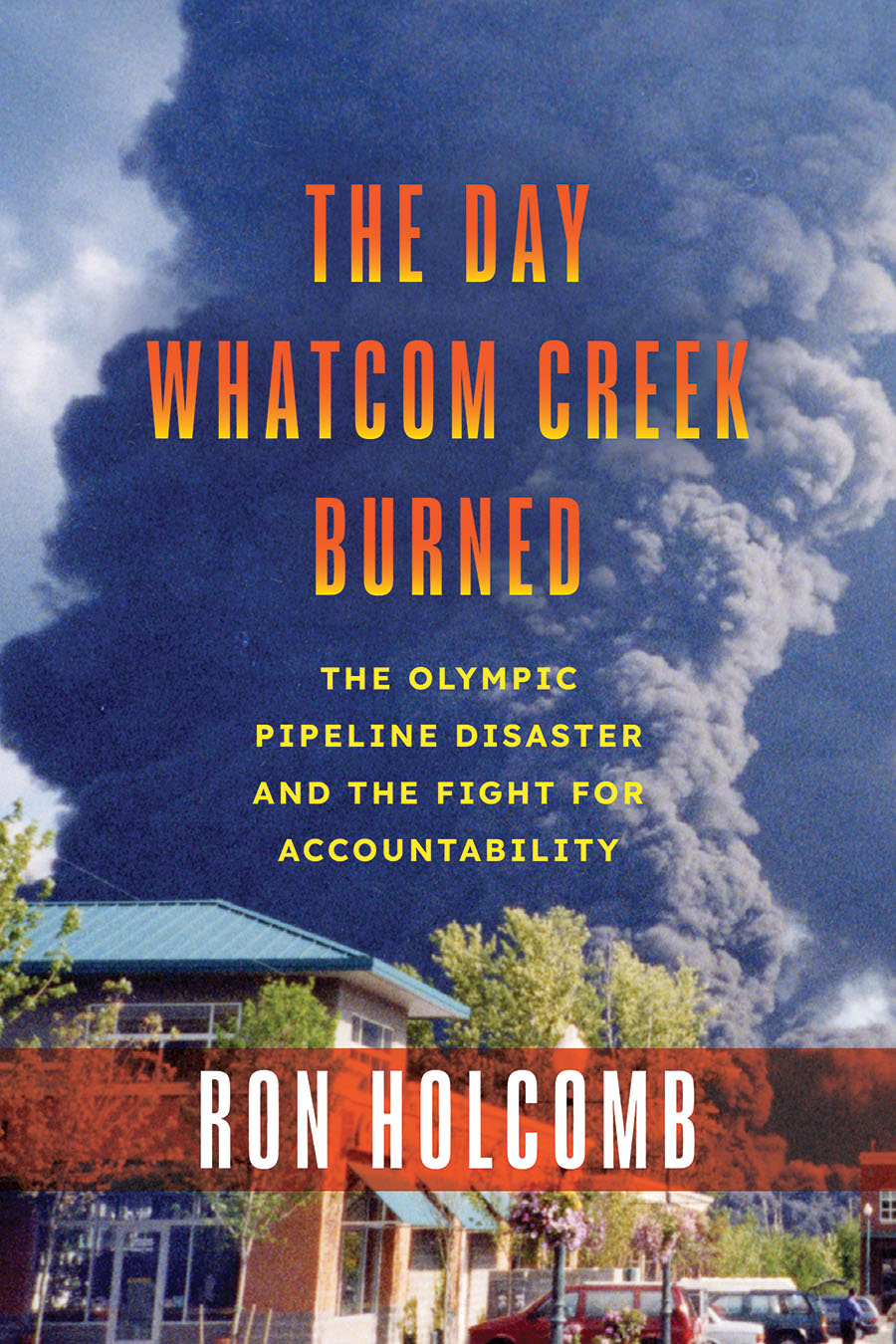
On June 10, 1999, an undetected gasoline leak from a thirty-year-old buried pipeline devasted a quiet corner of Bellingham, Washington. Over 200,000 highly flammable gallons flowed unchecked into Whatcom Creek and ignited into a human and environmental catastrophe now known as the Olympic Pipeline Disaster. A gigantic fireball raced down the creek, ravaging a natural refuge, and a towering plume of black smoke rose in the sky as explosions echoed across the city. Most tragically, the disaster took three young lives—an 18-year-old fly fisherman and two 10-year-old boys.
The shocking events stunned the nation and exposed serious failures in pipeline regulation, oversight and corporate accountability. Yet from the ashes emerged an extraordinary story of resilience. Refusing to let the tragedy be forgotten, the victims’ families and an outraged community challenged one of the nation’s most powerful industries, ultimately helping reshape pipeline safety regulations.
Drawing on his firsthand experience as the Washington State Department of Ecology spill responder assigned to the disaster, he takes readers inside the emergency response, environmental restoration, criminal investigation and the years-long fight for justice. The case led to the first criminal convictions of pipeline company executives, more than $100 million in penalties, and the creation of the Pipeline Safety Trust—the nation’s only nonprofit organization with a full-time staff dedicated exclusively to pipeline safety. The lessons of Bellingham were paid for at an unbearable cost. They are too important to forget
“An important account of a devastating tragedy.”—Mike Soraghan, energy reporter, Politico
“Kudos to Ron Holcomb for writing with empathy and authority…”—John Dodge, environmental reporter and author of A Deadly Wind
“We do not want our boys to be forgotten, and we want their deaths to continue to make a difference. This book will help that cause.”—Bruce Brabec, stepfather of Olympic Pipeline victim Liam Wood
“[Holcomb] reminds us all of what’s still important today.”—Dean Kahn, former editor, The Bellingham Herald
“A clear, comprehensive, riveting explanation of the complex world of oil and gas pipelines.”—Lois Epstein, Alaska-based engineer and Pipeline Safety Trust board member
“An important and deeply relevant book.” —Mark Asmundson, mayor of Bellingham, 1996–2006
“Ron Holcomb tells this tragic story with accuracy, insight, and the perspective of someone who was there…an authoritative account.”—Dan Doty, former natural resource damage assessment scientist, Washington State Department of Fish and Wildlife
About the author
Ron Holcomb retired in 2020 after a 40-year public service career dedicated to protecting the environment, including 25 years as a spill responder for the Washington State Department of Ecology. He served as the Spill Team Lead for Ecology’s Southwest Region and handled more than 6,000 oil and hazardous material spill incidents. Before becoming a spill responder, he was a public information officer for Ecology and the Wisconsin Department of Natural Resources. He earned a Master of Science in Environmental Communications from the University of Wisconsin after receiving a bachelor’s degree in journalism, biology and natural resources from Humboldt State University in Arcata, California. His love of the outdoors and commitment to environmental stewardship began with childhood visits to national parks and forests and involvement with The Mountaineers. Drawing on decades of firsthand experience, Holcomb now writes about the people, disasters and environmental emergencies that shaped Washington state’s modern spill response system.
Recognition
“This is an important account of a devastating tragedy. With the eye of a trained investigator, Holcomb details how this disaster was allowed to happen and how survivors found a way to channel their grief into lasting change for pipeline safety.”
—Mike Soraghan, energy reporter, Politico
“Kudos to Ron Holcomb for writing with empathy and authority about the deadly Olympic Pipe Line Co. explosion, a 1999 tragedy that rocked Bellingham and triggered demands for stronger national pipeline safety standards.”
—John Dodge, environmental reporter and author of A Deadly Wind
“The Bellingham story needs to be told and retold. I thank author Ron Holcomb for his remarkable effort in producing this record. We do not want our boys to be forgotten, and we want their deaths to continue to make a difference. This book will help that cause.”
—Bruce Brabec, stepfather of Olympic Pipeline victim Liam Wood
“More than three million miles of fuel pipelines crisscross this country —largely unseen, unexamined, and unknown to the public and local governments alike. The Day Whatcom Creek Burned tells the harrowing story of how my community discovered just how catastrophically things can go wrong when a pipeline operator—and the regulators charged with holding it accountable—fail to pay enough attention to safety. More importantly still, it is the story of how that same community refused to be silenced: stepping up to demand restoration of what had been destroyed and fighting to transform pipeline safety across the nation.”
—Carl Weimer, Special Projects Advisor and former Executive Director, Pipeline Safety Trust
“If you find this book as important and impactful as I did, I encourage you to share it with those responsible for public safety and infrastructure in your community—mayors, city and county officials, state legislators, utility executives and regulators. Preventable tragedies are far less likely when informed citizens and accountable leaders work together. Public awareness and accountability save lives.”
—Jim Hall, NTSB Chair, 1994–2001; from the Foreword
“On a pleasant June afternoon in 1999, a resounding boom and a dark plume of smoke thousands of feet high stunned our Northwest city. We soon learned that a fuel pipeline had ruptured, spilling more than 200,000 gallons of gasoline that ignited, killing three youths, and charring more than a mile of a major creek in a beloved park. Ron Holcomb’s book, the first to detail the disaster in Bellingham, Washington, reminds us all of what’s still important today; in the face of wrongdoing and calamity, a community can unite and fight for justice, accountability, and changes to make the world a safer place.”
—Dean Kahn, former editor, The Bellingham Herald
“Ron Holcomb’s The Day Whatcom Creek Burned provides a clear, comprehensive, riveting explanation of the complex world of oil and gas pipelines, including how tough it is to analyze causes and reduce incidents following a terrible tragedy. As someone who has worked to improve pipeline safety nationally since the 1990s, I’m sad that the Bellingham tragedy is not unique, but I’m inspired by the victims’ parents and the community members who visibly and tirelessly worked to ensure there would be fewer pipeline tragedies in the future. Additionally, the book kindly and thoughtfully conveys the story of this tragedy on the families involved, on the greater Bellingham community, and on the environment.”
—Lois Epstein, Alaska-based engineer and Pipeline Safety Trust board member
“The Day Whatcom Creek Burned is a book that needed to be written. Ron Holcomb recounts one of the Pacific Northwest’s most devastating and consequential disasters with honesty, compassion, and remarkable depth. This is a
story of heartbreaking loss, corporate and institutional failure, and a community forced to confront tragedy in its own backyard. As mayor of Bellingham during the disaster, I witnessed firsthand the pain it caused and the lasting impact it left on our community. Through exhaustive research, firsthand experience, and compelling storytelling, Holcomb has produced an important and deeply relevant book that ensures those lives, those lessons, and the struggle for accountability will not be forgotten.”
—Mark Asmundson, mayor of Bellingham, 1996–2006
“When we arrived in Bellingham the morning after the explosion, none of us anticipated the scale of the environmental devastation. As a natural resource damage assessment scientist with the Washington Department of Fish and Wildlife, I helped assess the damage and develop the long-term restoration plan. In The Day Whatcom Creek Burned, Ron Holcomb tells this tragic story with accuracy, insight, and the perspective of someone who was there. This is an authoritative account of one of Washington state’s most significant environmental disasters.”
—Dan Doty, former natural resource damage assessment scientist, Washington State Department of Fish and Wildlife