The Shocking Story of the Washington Territorial Justice Appointed to the Bench While Indicted for Murder
WSU Press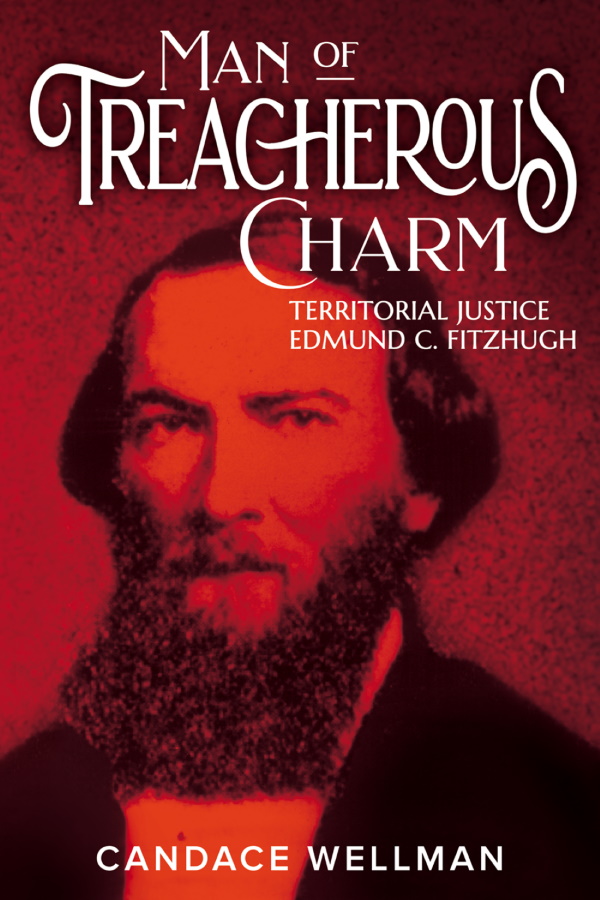
HOW ONE WASHINGTON TERRITORIAL JUSTICE EXPLOITED HIS NETWORKS TO INFLUENCE THE REGION’S LEGAL AND SOCIAL HISTORY
“Perhaps the single most enlightening takeaway for me was the stark contrast between the legal landscape of Fitzhugh’s time and that of my own. No current judge would even consider hearing, on appeal, a case over which they had presided as the trial judge…an entertaining and educational read.”—Chuck Snyder, retired Whatcom County Superior Court Judge
Along with his privileged education, Edmund C. Fitzhugh was deeply shaped by his Virginia family’s history and ethics. “From the moment Fitzhugh’s tall leather boots struck the mud flats in front of the Roeder-Peabody Mill in 1854, the effects of the charismatic man on the infant community and Washington Territory were wide, and for some people, destructive,” says Candace A. Wellman, author of the new book, Man of Treacherous Charm: Territorial Justice Edmund C. Fitzhugh, the first full biography of a Washington Territory justice. His life offers insights into the people, politics, and legal practices—vastly different from today—of the territory and 19th century American West. “Fitzhugh was appointed to the federal bench while under indictment for murder. He made measured judicial decisions, helped organize the early Democratic Party machine in California and Washington, helped run a national presidential campaign, and fought heroically in the Civil War. And yet he died alone in a dingy hotel,” she adds.
Wellman’s interest in Fitzhugh began while she volunteered at the Washington State Archives and started to research her first book about indigenous womens’ roles in early Pacific Northwest history. One of the women married Fitzhugh, and Wellman noted his influence on the region’s legal and social history, along with his participation in important events in gold rush era San Francisco and Civil War Virginia. She decided to tell his story, traveling to Virginia to conduct research in Fitzhugh’s hometown and state repositories, as well as to the National Archives, San Francisco’s library, and multiple Washington State collections. Across two decades, she worked with dozens of collaborators.
Born into a wealthy, slave-owning colonial Virginia clan, Fitzhugh learned to focus on accumulating wealth and power. Following his West Point expulsion, he became a small-town lawyer and legislator before seeking fortune in San Francisco, where he associated with prominent attorneys and California Democrats. After coal was discovered in Washington Territory, a newly formed syndicate sent Fitzhugh north to open and manage a Bellingham Bay coal mine, and to sway that region’s Democrats. Elected Whatcom County’s first auditor, he used his position as the territory’s largest employer to benefit himself and the mine. He married two important indigenous women who brought their own kind of wealth and influence. He also exploited family, personal, and political networks to become the first local Indian agent during the Treaty War, a military aide to Governor Isaac Stevens, a district and supreme court justice, and a member of Brigadier General Eppa Hunton’s Civil War staff. After Fitzhugh kidnapped his two children and sent them to a distant white family, his indigenous wives deserted him. Two later marriages to women from prominent colonial families also did not last.